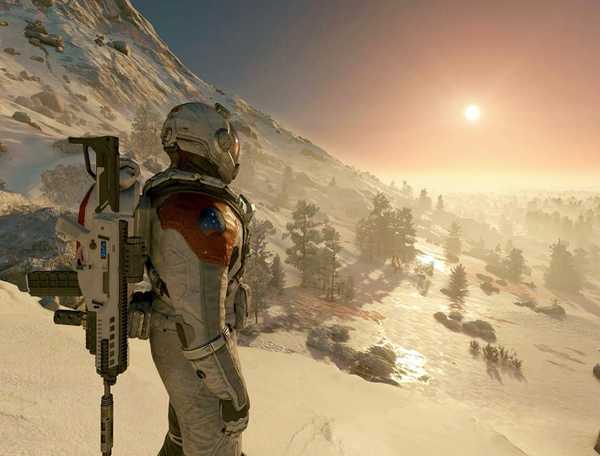
Fans of these games can play them almost endlessly, discovering new additions and alterations through the community modding scene.
If there’s one indisputable advantage that PC has over consoles, it’s the flexibility offered by thriving modding communities. Almost every popular game inevitably attracts enthusiasts who strive to enhance it, improving key areas or altering divisive elements from the original. As a result, players can tailor their experience to their vision, as mods vary widely — from minor additions like extra cosmetics, skins, outfits, or hairstyles to significant changes, such as rebalanced combat systems, graphical enhancements, removed level caps, expanded inventories, new weapons, armor, and much more. Some dedicated fans even create their own quests and entire campaigns for their beloved games, or produce spectacular conversion mods, sharing them with other players just for the fun of it.
Over time, several open-world RPGs have developed a true cult following for modding, with thousands of mods available to tweak every aspect of the base game. This grants an extended lifespan, allowing the game to improve over the years as more mods are created and released, bringing it closer to modern standards and delaying its obsolescence. Skyrim is often the first example that comes to mind, as is the case for most role-playing games by Bethesda, Obsidian, BioWare, and CD Projekt Red. Let’s take a look at some of the most notable modern open-world RPGs that aged gracefully thanks to active mod support, offering fans some of the widest selections of mods on the market.
We’ve already mentioned Skyrim as one of the evergreen pillars of the modding scene (along with Fallout 4), but let’s examine a more recent Bethesda game to see how fans and modding enthusiasts have embraced it. Starfield proved to be a highly divisive game at launch, seemingly failing to meet the lofty expectations set by its pre-launch hype. With a much grander scope than any previous Bethesda title, Starfield’s biggest challenge was its fragmented world of countless planets that often feel repetitive, diminishing the sense of a seamless adventure that the studio previously achieved with a single, expansive map. However, this doesn’t mean Starfield lacks potential.
One of Starfield's key selling points was its flexible ship-building and base-construction mechanics, offering even greater depth and versatility than those in vanilla Fallout 4. These features were merely a starting point for modders, who continue to expand the original possibilities. This applies to nearly every other aspect of the game as well, including the character creator, weapons and gear systems, new quests and adventures, and more. Starfield also quickly received a variety of unofficial patches to refine the overall experience, addressing persistent bugs and introducing numerous reshades and custom graphics presets to enhance its visual appeal. Some ambitious mods even offer total conversions, such as transforming the game into a Star Wars universe, bringing fan-favorite aesthetics and atmosphere to this spacefaring RPG. It’s worth noting that Starfield features a curated platform called “Creations,” where players can access both official and community-made mods with seamless integration (though some are paid). Despite a less-than-stellar launch, it’s clear that Starfield continues to improve each year, thanks to both the core team’s efforts (such as the addition of the Rev-8 Rover vehicle) and the dedicated modding community, so the game’s best days are still ahead.
Another example of an initially troubled launch, Cyberpunk 2077 isn’t simply aging well — it continues to evolve, with CD Projekt Red releasing patches and content updates for five years straight. Today’s vanilla Cyberpunk 2077 is vastly superior to its 1.0 version in every aspect, featuring substantial changes such as a complete overhaul of the skill tree, clothing and implants systems, as well as a proper police system. However, official support is just the tip of the iceberg compared to the boundless passion and dedication that modding enthusiasts bring to the world of Night City.
Despite being released five years ago, Cyberpunk 2077 remains one of the most visually stunning open-world games available, thanks to official implementations of cutting-edge technologies like path tracing. Mods take its visual grandeur even further, enhancing the quality of textures, materials, and models, improving or customizing the UI for a more immersive experience, and making NPCs more distinct and lifelike. Characters are the heart and soul of Cyberpunk 2077, so it’s no surprise that countless mods expand the game’s character creator, introducing exciting new possibilities, outfits, and tattoos to help players craft the exact character they want to roleplay. This extends to new additions like weapons, ranging from guns to katanas and everything in between, as well as new driveable vehicles. Moreover, some truly game-changing mods introduce features like flying vehicles, fully dynamic quests and activities, and in-depth survival mechanics, allowing players to virtually live in Night City beyond its main story and side quests.
Even in its vanilla form, Mount & Blade 2: Bannerlord stands tall among open-world RPGs, offering unmatched flexibility in gameplay, tactical and strategic possibilities, and a realistic, historically grounded world. While it may lack the polished flair of typical triple-A titles and feel rough around the edges, it more than compensates with its sheer grandeur and freeform gameplay, allowing players to focus on the aspects they enjoy most. With all that, Bannerlord provides a near-perfect foundation for enhancement through mods, which largely target gameplay features and core mechanics, rebalancing or refining them for an even more immersive playing experience.
From detailed character creators, enhanced third-person combat, and the ability to roleplay as virtually anyone to more expansive features like reworked diplomacy, realistic smithing, improved large-scale battles with better AI, and more robust reputation and companion systems, there are no limits to what players can alter in Bannerlord to keep it fresh. Many mods also enhance the game’s presentation, adding immersive details, dynamic weather conditions, and significant graphical improvements. As with any great open-world RPG, fans can explore total conversion mods that transform Mount & Blade 2: Bannerlord into, for example, Tolkien’s Middle-earth (Tales from the Age of Men) or George R.R. Martin’s Westeros (Realm of Thrones), among others. For hardcore fans, numerous mods emphasize the game’s historical roots, prioritizing accuracy and authenticity above all. With all these additions, Mount & Blade 2: Bannerlord exemplifies a game that refuses to age, instead growing richer in possibilities with each passing year.
Since its launch in 2022, Elden Ring has solidified its place as an open-world RPG that's built to last, maintaining impressively high player counts for years. This enduring popularity, combined with its PvP options, has made the game a favorite for modding. Already brimming with diverse character builds and combat possibilities, even multiple playthroughs won’t be enough to try out everything the game offers. However, dedicated players can extend their Elden Ring experience beyond its vanilla content, as mods breathe new life into adventures across The Lands Between.
One of the most notable mod additions is seamless co-op, which proved so popular that it seemingly inspired the devs to explore similar features in their next big titles. Randomizers are another standout category, making each Elden Ring playthrough feel fresh by shuffling enemy, boss, and reward locations, greatly enhancing the unpredictability of its world. Players can pair randomizers with mods that introduce new weapons, robust movesets, or even port bosses and weapons from FromSoftware’s earlier games into Elden Ring — a concept the developers themselves successfully embraced in Elden Ring Nightreign. Finally, given the game’s somewhat dated visuals (in terms of technology), numerous fan-made projects elevate Elden Ring’s visual fidelity on PC, with enhanced textures, models, lighting, and an overall richer atmosphere.
In 2025, The Witcher 3: Wild Hunt celebrated its 10th anniversary, yet it remains far from abandoned or forgotten. The devs have re-released the iconic RPG on all modern platforms with official enhancements and additions, making the Complete Edition an essential experience for fans of the Witcher universe. While The Witcher 3’s modding scene may not match the scale of Skyrim or other open-world RPGs from the past 15 years (largely due to the absence of a character creator), fans can still significantly enhance or transform nearly every element of the game to rediscover Geralt’s adventures.
From countless new armor sets and weapons to find and craft, refined combat flow and animations, new Witcher perks and skills to master, and more challenging enemies and monsters to hunt, it’s like today’s vanilla The Witcher 3 serves as a foundation for the experience players want to create for themselves. Modders provide numerous graphics presets and custom lighting, improved textures and models (such as Halk Hogan’s Reworked Project NextGen Edition), additional quests to explore, and smaller but highly sought-after tweaks like unlimited inventory, an overhauled Witcher sense, or entirely new survival mechanics to make the game even more immersive and challenging. With no limit to the creativity of its fans, The Witcher 3: Wild Hunt is still well worth revisiting periodically to explore all the latest additions and relive Geralt's unforgettable adventures.
Bản xem trước mở rộng – Nội dung chưa đầy đủ.
